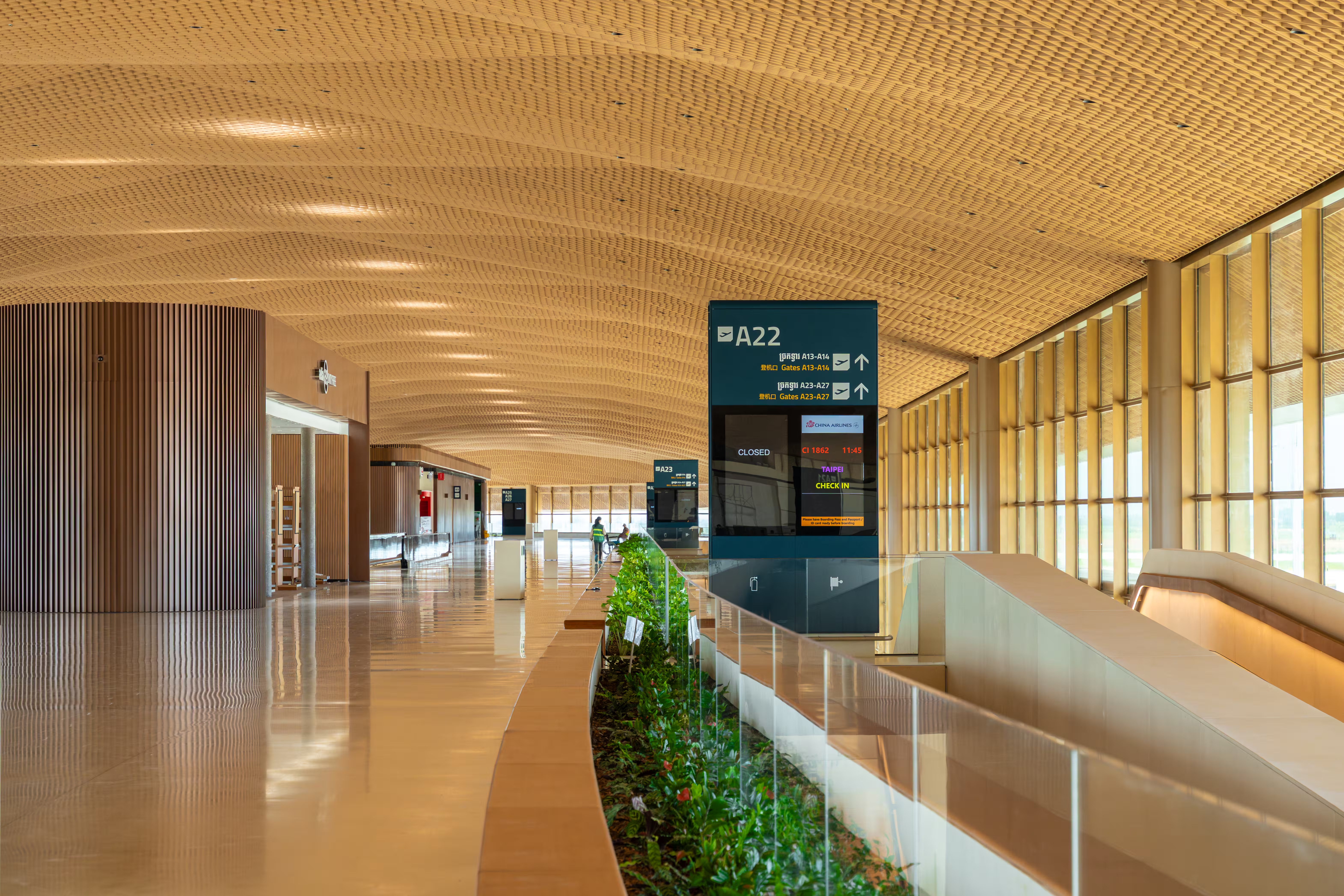
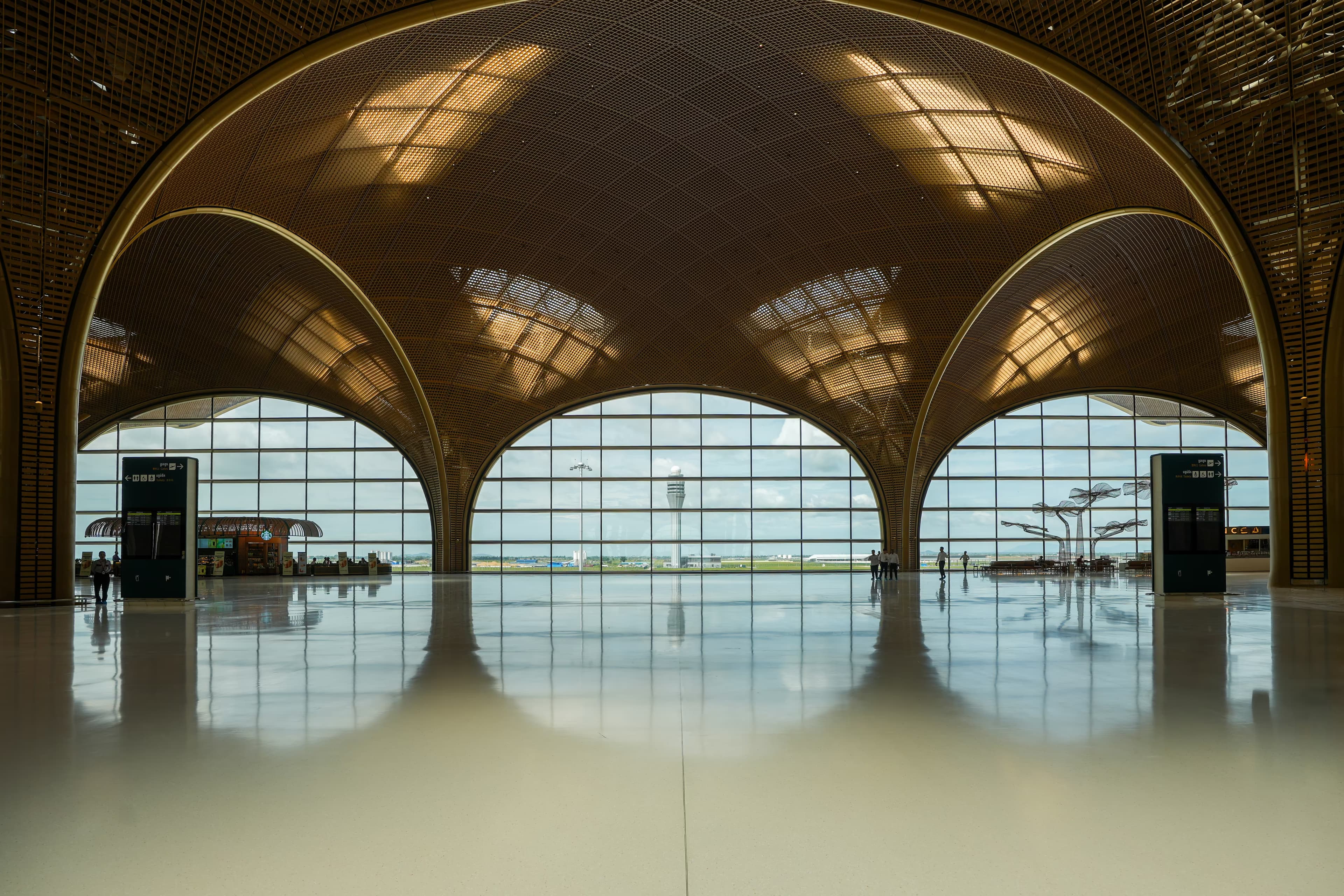

The departure hall at Techo International Airport

Welcome toTecho Airport Art Exhibition

The Exhibition

Nine works. One terminal. Fifteen centuries.

These nine works are not uniformly ancient. A Vishnu carved at Phnom Da in the late sixth century stands alongside sculptures made in our own time, in the same tradition, by hands still practising it.

That is the point of the collection. Not a mausoleum but a living practice — and every traveller passes through it on the way to the gate.

The Collection
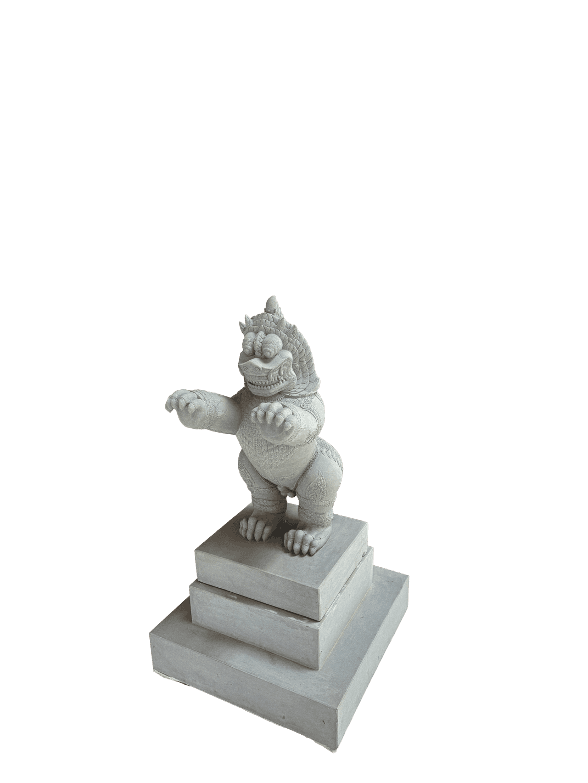
Mythical Lion Guardian
01

Mythical Lion Guardian

សិង្ហ

The Mythical Lion Guardian is a mythical lion guardian frequently depicted in Khmer art and architecture. In ancient Cambodia, lion statues were commonly placed at the entrances of temples and sacred structures to serve as protectors, preventing evil spirits and harmful forces from entering religious spaces.

Unlike most Khmer lion sculptures, which stand firmly on all four legs, the two Mythical Lion Guardian statues discovered at the Bakan Temple Complex are exceptionally rare. They are depicted standing upright on their two hind legs while raising their front legs, creating a dynamic and powerful posture not commonly found in Khmer sculpture. Art historians date these statues to the Bayon period during the reign of King Jayavarman VII in the late 12th and early 13th centuries.

Period / Dynasty

Bayon Period, Khmer Empire

Date

Late 12th Century to Early 13th Century CE

Reign

Reign of King Jayavarman VII (1181–1220 CE)
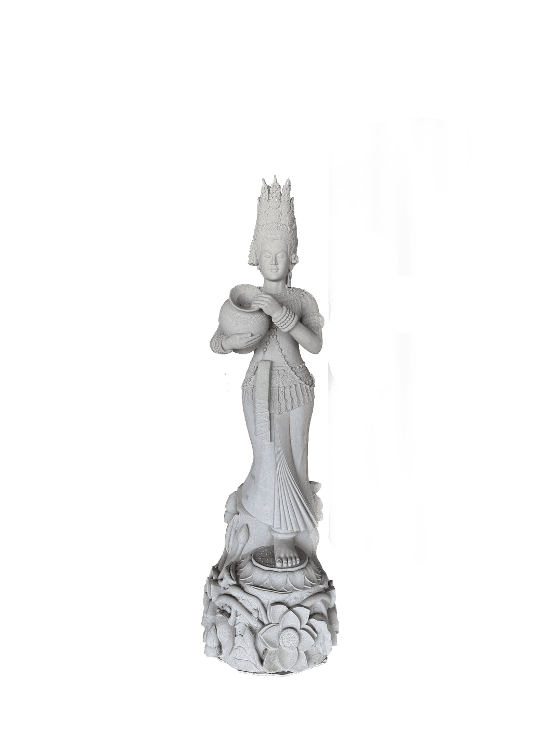
Ganga Devi (Goddess of the Sacred River)
02

Ganga Devi (Goddess of the Sacred River)

គង្គាទេវី

Ganga Devi is the goddess of sacred water, purity, fertility, and abundance. She is often depicted holding a water vessel from which life-giving water flows. In Hindu and Khmer traditions, water symbolizes purification, prosperity, renewal, and the continuity of life. The figure represents blessings, well-being, and the nurturing forces of nature.

Period / Dynasty

Inspired by Angkorian Khmer Art

Date

Contemporary Sculpture Based on Classical Khmer Tradition

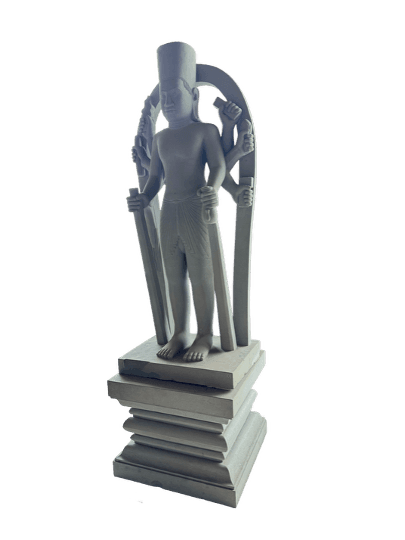
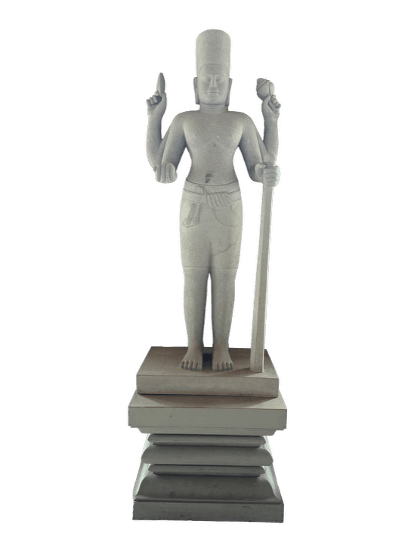
Vishnu with Eight Arms
03

Vishnu with Eight Arms

ព្រះវិស្ណុព្រះហស្តប្រាំបី

The statue represents Vishnu, one of the principal deities of Hinduism and the central deity of the Vaishnava tradition. According to the study, it reflects the strong influence of Vishnu worship in early Khmer society and demonstrates the development of Khmer religious art during the Pre-Angkorian period.

Period / Dynasty

Phnom Da Style, Pre-Angkorian Period

Date

Late 6th to Early 7th Century CE

Place of Discovery

Phnom Da, Angkor Borei District, Takeo Province, Cambodia

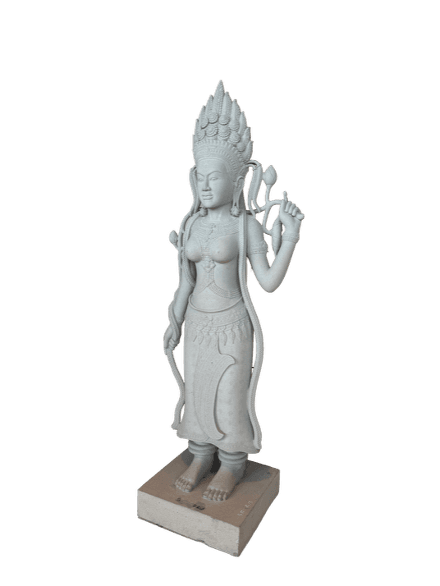
Devata (Celestial Goddess)
04

Devata (Celestial Goddess)

ទេពធីតា

The Devata symbolizes beauty, grace, protection, prosperity, and harmony. In Khmer art, Devatas represent divine virtues and serve as celestial guardians, embodying the connection between the human and spiritual realms. Their presence signifies blessings, peace, and prosperity.

Period / Dynasty

Bayon Period, Khmer Empire

Date

Late 12th Century to Early 13th Century CE (based on artistic style)

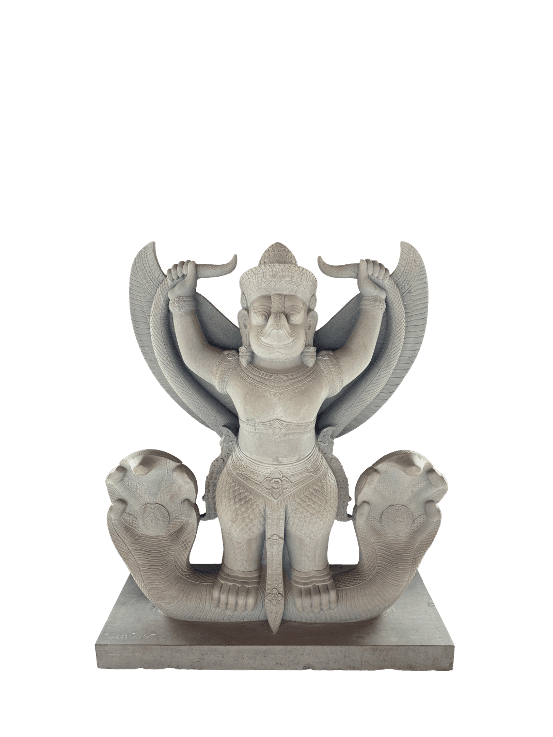
Garuda
05

Garuda

គ្រុឌ

Garuda symbolizes strength, courage, power, protection, and victory over evil forces. In Khmer tradition, he represents the ability to overcome obstacles and serves as a guardian figure associated with divine authority and protection.

Period / Dynasty

Inspired by Angkorian Khmer Art

Date

Based on Khmer representations from the 7th–13th Century CE

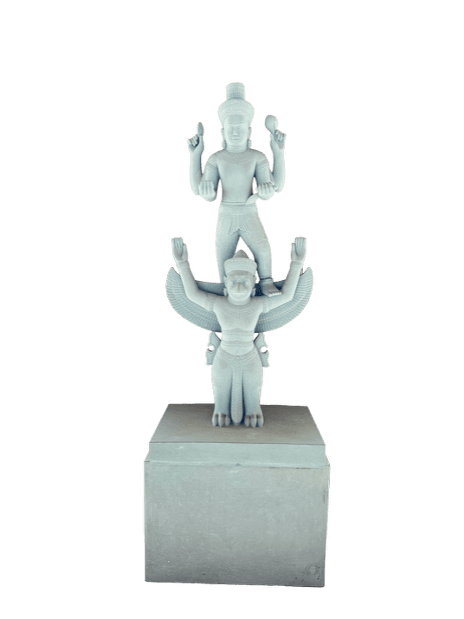
Vishnu Riding Garuda
06

Vishnu Riding Garuda

ព្រះវិស្ណុគង់លើគ្រុឌ

Vishnu is the Preserver and Protector of the Universe in Hindu tradition. Garuda, his divine mount, symbolizes strength, courage, and protection. Together, they represent divine authority, cosmic order, balance, and the protection of the world against chaos and harmful forces.

Period / Dynasty

Bayon Period, Khmer Empire

Date

Late 12th Century to Early 13th Century CE (based on artistic style)

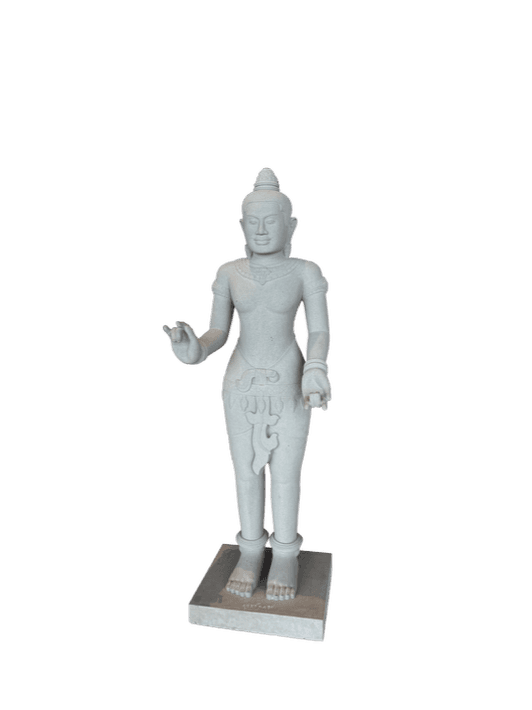
Devaputra (Celestial Male Figure)
07

Devaputra (Celestial Male Figure)

ទេវបុត្រ

This celestial male figure represents the ideals of Khmer Bayon-period art, emphasizing serenity, wisdom, compassion, and spiritual harmony. The gentle smile, calm expression, and graceful posture reflect the artistic and religious values that flourished during the reign of King Jayavarman VII. Rather than portraying a specific deity, the sculpture symbolizes inner peace, noble character, and the elevated spiritual ideals of Angkorian civilization.

Period / Dynasty

Bayon Period, Khmer Empire

Date

Late 12th Century to Early 13th Century CE (based on artistic style)

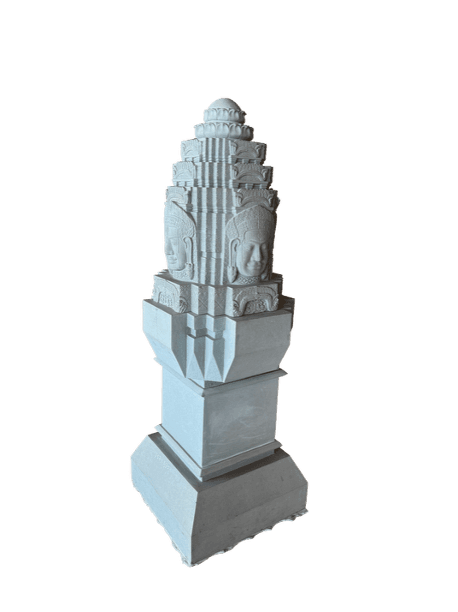
Bayon Face Tower (Tower of Compassion)
08

Bayon Face Tower (Tower of Compassion)

ប្រាសាទមុខបាយ័ន

This sculpture is inspired by the iconic face towers of the Bayon Temple at Angkor Thom. The serene faces embody compassion, wisdom, and spiritual tranquility, reflecting the ideals of Mahayana Buddhism promoted during the reign of King Jayavarman VII. Scholars generally interpret these faces as representing either the Bodhisattva Avalokiteśvara (Lokeshvara), the embodiment of compassion, or an idealized image of King Jayavarman VII himself united with Buddhist virtues.

Period / Dynasty

Bayon Period, Khmer Empire

Date

Late 12th Century to Early 13th Century CE

Reign

King Jayavarman VII (1181–1218 CE)

Vishnu
09

Vishnu

ព្រះវិស្ណុ

The statue represents Vishnu, one of the principal deities of Hinduism and the central deity of the Vaishnava tradition. It reflects the importance of Vishnu worship in early Khmer society and symbolizes divine protection and preservation.

Period / Dynasty

Kulen Style, Early Khmer Art

Date

9th Century CE

Place of Discovery

Prasat Rup Arak, Phnom Kulen, Siem Reap Province, Cambodia

The gate concourse at Techo International Airport

Find them on the way to your gate.

Locations

The nine works are distributed throughout the terminal. Each stands where passengers pass it on the way through.

Open the full map
Pending

Artifact-to-zone mapping is not yet known. This block holds the per-location list, and the layout accepts it without change.

Come for the flight.
Stay for the story.

Visit the airport website
Techo International Airport